Burnout Therapy for Individuals
Specialist Psychological support for burnout, stress, exhaustion & overwhelm. 100% confidential private pay therapy services.

Feeling burnt out, exhausted, or constantly overwhelmed?
Signs You May Be Experiencing Burnout
Feeling constantly tired, even after rest
Struggling to switch off from work
Increased anxiety, irritability, or emotional numbness
Loss of motivation or enjoyment
Difficulty concentrating or making decisions
Physical symptoms (headaches, tension, sleep problems)
How Therapy for Burnout Can Help
1. Understand the Root Causes
Burnout is often a combination of:
- External pressures (workload, expectations, life demands)
- Internal patterns (perfectionism, people-pleasing, high self-criticism)
We work with you to map both—so you can make meaningful, lasting changes.
2. Regulate Your Nervous System
When burnout develops, your body can become stuck in “survival mode,” reducing your ability to rest, think clearly, and recover.
Therapy focuses on helping your nervous system stabilise so you can regain energy, clarity, and emotional balance.
3. Break Unhelpful Patterns
Many individuals experiencing burnout are:
- Highly driven
- Responsible
- Used to pushing through
We help you identify and shift patterns such as:
- Overworking
- Difficulty setting boundaries
- Harsh self-criticism
4. Rebuild Sustainable Ways of Living and Working
Recovery is not just about feeling better—it’s about creating a way of working and living that is sustainable long-term.
This may include:
- Boundary setting
- Values-based decision making
- Healthier productivity habits
- Reconnecting with rest, relationships, and meaning
Research Evidence
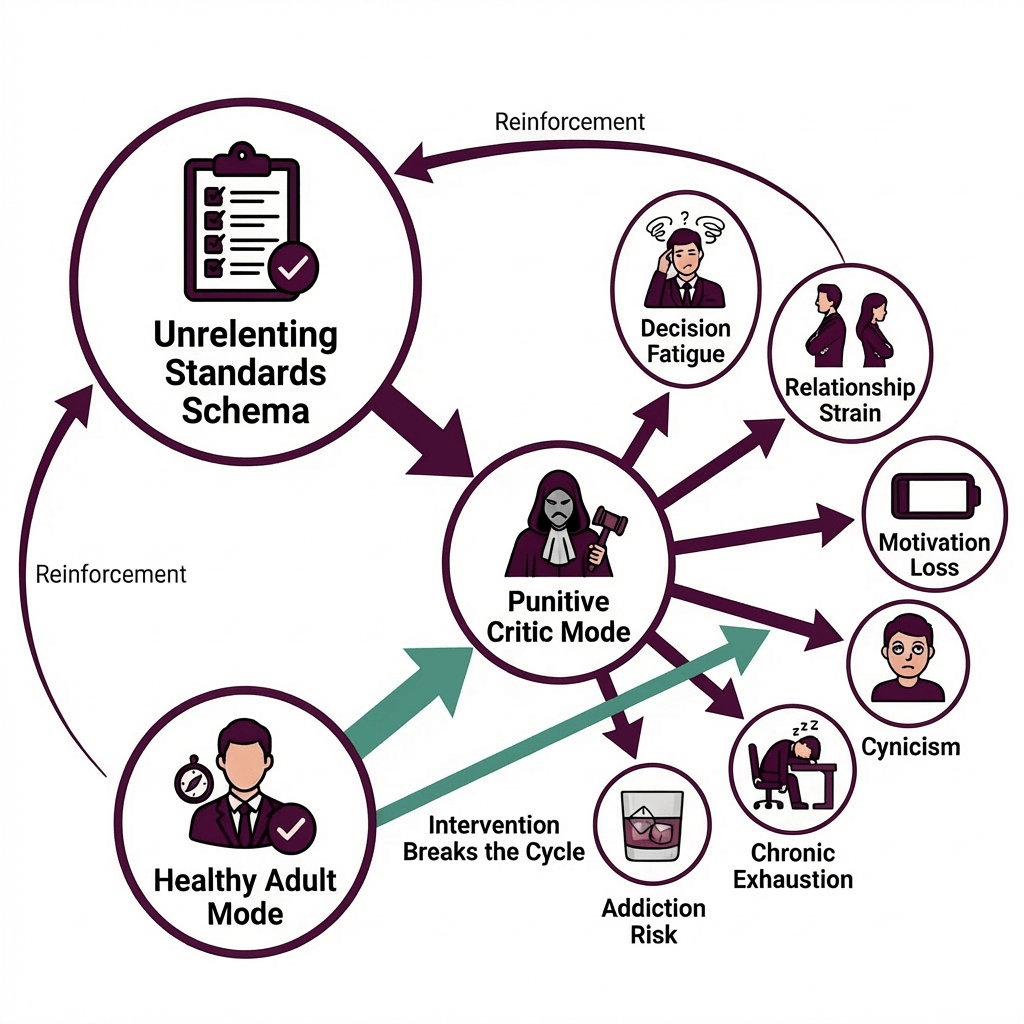
Burnout is often schema-driven, not "just stress".
Studies show that early maladaptive schemas and coping modes (for example, Detached Protector, Compliant Surrenderer) predict emotional exhaustion and burnout in employees, including psychologists and other professionals (Kaeding et al., 2017; Bamber & McMahon, 2008).
Perfectionism and self-sacrifice are key risk factors.
Strong schemas such as emotional deprivation, imperfection/shame, failure and insecurity are linked with higher burnout scores across emotional exhaustion, depersonalisation and reduced sense of achievement – especially in high achievers (Soygüt et al., 2009).
Schema therapy directly targets these patterns.
Schema therapy focuses on modes, unmet needs and early life patterns that drive over-working, approval-seeking and difficulty setting boundaries, offering a strong theoretical and emerging empirical basis for preventing relapse in recurrent burnout (Young, Klosko & Weishaar, 2003).
Real-world evidence in professionals is promising.
Quasi-experimental studies with healthcare staff and counsellors show that schema-focused interventions can reduce job burnout and related thinking styles (such as referential thinking), with significant improvements from pre- to post-treatment (Kaeding et al., 2017).
Case material in executives mirrors clinical experience.
Published case studies describe senior leaders whose problems at work (anger, conflict, over-work, perfectionism) were formulated in terms of schemas and modes, with clear improvements in work functioning and relationships after mode work, imagery rescripting and behavioural change (Young, Klosko & Weishaar, 2003).
Best used for recurrent or complex burnout.
For acute burnout from clear, short-term stressors, a CBT-style approach can relieve symptoms quickly; for repeated burnout in high-achieving leaders, schema therapy offers a more comprehensive way to change how the person relates to work, success and limits (Leiter & Maslach, 2005; Mikulincer & Shaver, 2007).
Our Approach to Burnout Therapy
We use evidence-based psychological therapies, tailored to your needs, including:
These approaches are widely used by qualified psychologists to support recovery from burnout, trauma, and chronic stress.
Your therapy is personalised—so you’re not wasting time on generic strategies that don’t work.
The 12-24 week Executive Recovery Journey
4-phase timeline landscape
Mode awareness
Pattern change
Resilience building
Leadership impact
Apply your growth to real-world contexts, particularly in leadership and high-responsibility roles. This phase focuses on sustaining change, enhancing decision-making, and showing up with clarity, confidence, and emotional intelligence—enabling you to lead effectively and authentically.
Who We Work With
We support individuals who:
- Work in high-pressure or demanding roles
- Feel overwhelmed, stuck, or close to burnout
- Are signed off work or struggling to keep going
- Want to regain control, clarity, and energy
Many of our clients are capable, high-functioning professionals who need effective, structured support—not surface-level advice.

What You Can Expect from Therapy
After working with us, clients often experience:
- Improved energy, sleep, and focus
- Reduced anxiety and overwhelm
- Greater emotional resilience
- Healthier work-life balance
- A renewed sense of control and direction
Why Choose a Clinical Psychologist for Burnout?
Working with a qualified psychologist ensures:
- Evidence-based treatment
- In-depth understanding of mental health and behaviour
- Ethical, regulated practice
Experienced clinicians are trained to work with the complexity of burnout—including trauma, nervous system dysregulation, and long-standing behavioural patterns.
Start Your Burnout Recovery
You don’t have to wait until things get worse.
Whether you’re:
- Just starting to feel overwhelmed
- Struggling to cope day-to-day
- Or already experiencing burnout
Support is available.
Take the first step:
- Book an initial consultation
- Speak confidentially with a psychologist
Get a clear plan tailored to your needs


Our promise
- Absolute confidentiality guaranteed
- No insurance records or employer notifications
- Encrypted video – end-to-end security
- Private pay – complete financial discretion
- Flexible scheduling – no corporate calendar conflicts

Accreditations

About Your Burnout Therapists
Our team consists of qualified, HCPC registered psychologists with specialist training in:
Burnout and chronic stress
Trauma-informed therapy
Anxiety and emotional regulation
- HCPC Registered Practitioner Psychologist
All therapy is grounded in clinical research and real-world experience supporting individuals facing high levels of pressure and responsibility.